
The 2026 South Africa municipal elections are shaping up to be one of the most decisive moments in local governance.
As South Africa charts its course toward the 2026 municipal elections, the next 12 months are shaping up to be decisive. From national dialogues probing inequality and corruption to shifting alliances that could redraw the political map, the country is on the cusp of a critical moment. The elections, scheduled for late 2026 to early 2027, are not only about who governs municipalities but also about whether South Africa can stabilise its fragile coalition politics.
The Next Six Months: 2026 South Africa Municipal Elections Build-Up
National Dialogue: Promise or Political Theatre?
On 15 August 2025, government and civil society launched a national dialogue in Pretoria to tackle poverty, unemployment, crime, and corruption. While billed as a platform for reform, critics warn it risks becoming an expensive campaign exercise with little tangible outcome. The dialogue is expected to continue into 2026.
IEC Preparations Underway
The Independent Electoral Commission (IEC) is finalising ward boundaries, intensifying youth voter registration drives, and exploring the introduction of electronic voting. These steps will determine participation levels in the 2026 South Africa municipal elections.
By-Elections: Early Indicators
By-elections held on 23 July 2025 offered a glimpse of voter volatility. The Patriotic Alliance (PA) stunned observers with a win in Drakenstein, unseating the DA. While the ANC and DA retained their seats elsewhere, the PA’s gain signals a fluid electorate.
Municipal Boundaries Frozen
The Municipal Demarcation Board has confirmed that no municipal boundary changes will take place before the 2026 elections. Proposals such as splitting Maluti-A-Phofung were rejected, sparking community frustration but giving the IEC stability in preparations.
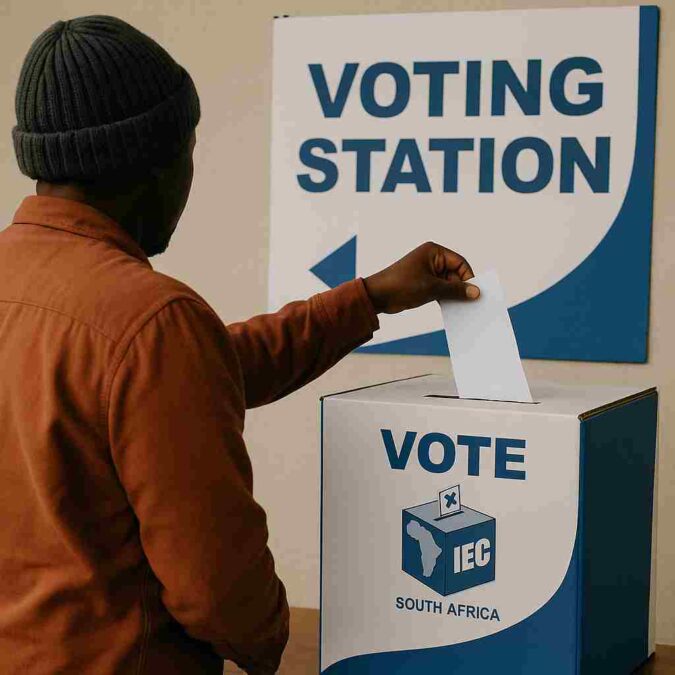
The Next 12 Months: Road to the 2026 South Africa Municipal Elections
The 2026 municipal elections in South Africa are scheduled to take place between 2 November 2026 and 1 February 2027, covering every metropolitan, district, and local municipality.
ANC’s Test of Strength
After falling below 50% in the 2024 general election and entering into a Government of National Unity (GNU), the ANC faces a major test. These elections will determine whether it can rebuild trust or lose further ground.
SACP’s Independent Run
For the first time in decades, the South African Communist Party (SACP) will contest municipalities independently, breaking from its traditional alliance with the ANC. This move could fragment left-leaning votes and reshape political alignments.
Opposition Strategies: MPC and ActionSA
The Multi-Party Charter (MPC)—including the DA, IFP, ActionSA, and others—aims to consolidate the opposition into a coordinated front. ActionSA, under Herman Mashaba, remains outside the GNU and MPC, positioning itself as a liberal, anti-corruption force with a strong urban voter base.
Coalition Politics on Trial
The GNU’s ability to deliver services in the coming year will be critical. If it fails, voter frustration could deepen, leading to further fragmentation at local level and unstable municipal coalitions after 2026.
So, Why Does This all Matter?
Service Delivery and Stability
Municipal councils directly affect daily life—from water supply to electricity and roads. Their effectiveness will influence investor confidence, development, and the likelihood of social unrest.
Political Realignments
With the PA rising, the SACP breaking away, and the MPC strategising, the traditional power blocs are shifting. This could usher in a new era of competitive coalition-driven governance.
Social Cohesion at Stake
Poor local governance has already fuelled unrest in recent years. The 2026 elections will be a referendum on whether South Africa can restore trust in institutions or slide deeper into disillusionment.
The countdown to the 2026 South Africa municipal elections is more than just a race for ward councillors. It is a test of whether coalition politics can stabilise governance or further fracture it. Over the next year, every by-election, party manoeuvre, and governance failure will set the stage for a political showdown that could redefine South Africa’s democratic future.
Leave your thoughts below and what your predicitons are?
Quick Summary
| Step | Action |
|---|---|
| 1⃣ | Go to your registered voting station |
| 2⃣ | Show your ID and get verified |
| 3⃣ | Name crossed off, thumbnail inked, ballot papers issued |
| 4⃣ | Vote in privacy and deposit ballot |
| 5⃣ | Special support available if needed |
Frequently Asked Questions (FAQs)
When are the 2026 South Africa municipal elections taking place?
The elections are scheduled to occur between 2 November 2026 and 1 February 2027, covering all metropolitan, district, and local municipalities across the country.
What is the purpose of municipal elections in South Africa?
Municipal elections determine who will govern local councils, which are responsible for basic services such as water, electricity, roads, waste management, and community development initiatives.
What is the significance of the 2026 elections?
These elections will be a litmus test for the country’s coalition-based governance model, the effectiveness of the Government of National Unity, and voter confidence in traditional and emerging political parties.
Is electronic voting being introduced?
The Independent Electoral Commission (IEC) is exploring the possibility of electronic voting as part of its modernisation efforts. However, no final decision has been announced yet.
Will municipal boundaries be changing before the elections?
No. The Municipal Demarcation Board has confirmed that no boundary changes will take place before the 2026 elections, despite some proposals being submitted.
What political shifts are expected in the 2026 elections?
Key developments include:
The ANC attempting to regain strength after its 2024 losses.
The South African Communist Party (SACP) running independently for the first time in years.
The rise of the Patriotic Alliance (PA) as a wildcard party.
Opposition consolidation under the Multi-Party Charter (MPC), including the DA, IFP, and ActionSA.
What is the role of the national dialogue launched in 2025?
The dialogue aims to address poverty, crime, unemployment, and corruption. While it is positioned as a reformative platform, some critics believe it may simply be a pre-election campaign strategy with limited tangible outcomes.
Why is coalition politics so important right now?
With no single party holding majority power in many municipalities or at national level, coalition governments are now the norm. The success or failure of these coalitions will shape future governance models and service delivery outcomes.
How could these elections affect daily life?
The results will directly impact service delivery, infrastructure development, and community well-being, which in turn affect economic growth, investment, and social stability.
What does voter turnout mean for these elections?
Higher voter turnout—especially among young and first-time voters—could significantly reshape the political landscape. The IEC is actively pushing registration drives to boost participation.
Be sure to read, Wegovy in South Africa: Cost, Alternatives, Side Effects and the Rise of Biohacking Weight Loss, if you missed it.
Reader discussion
Join the conversation