For decades, a marketing degree was considered the gateway into the world of advertising, branding and consumer engagement. Universities positioned their programmes as comprehensive pathways into an industry driven by creativity and strategy.
But in 2025, the ground beneath the marketing world has shifted so dramatically that many graduates are entering the workplace with knowledge that is already years behind real-world practice.
The result? A growing consensus within the industry that traditional marketing degrees are no longer aligned with the speed, tools, and demands of modern marketing.
Marketing has transformed more in the last ten years than it did in the previous fifty. The explosion of data analytics, social media platforms, AI-driven advertising, real-time bidding, influencer ecosystems, and performance-based digital channels has rewritten the rulebook entirely.
Meanwhile, university curricula continue to focus heavily on:
- Outdated case studies
- Textbook theory
- Broad principles without technical application
- Traditional media planning
- Basics of branding and consumer behaviour
These foundations aren’t irrelevant — but they’re far from sufficient.
Modern marketers are expected to understand so much more, just ask professional marketing agencies, companies forced to stay ahead of the game due to client expectation.
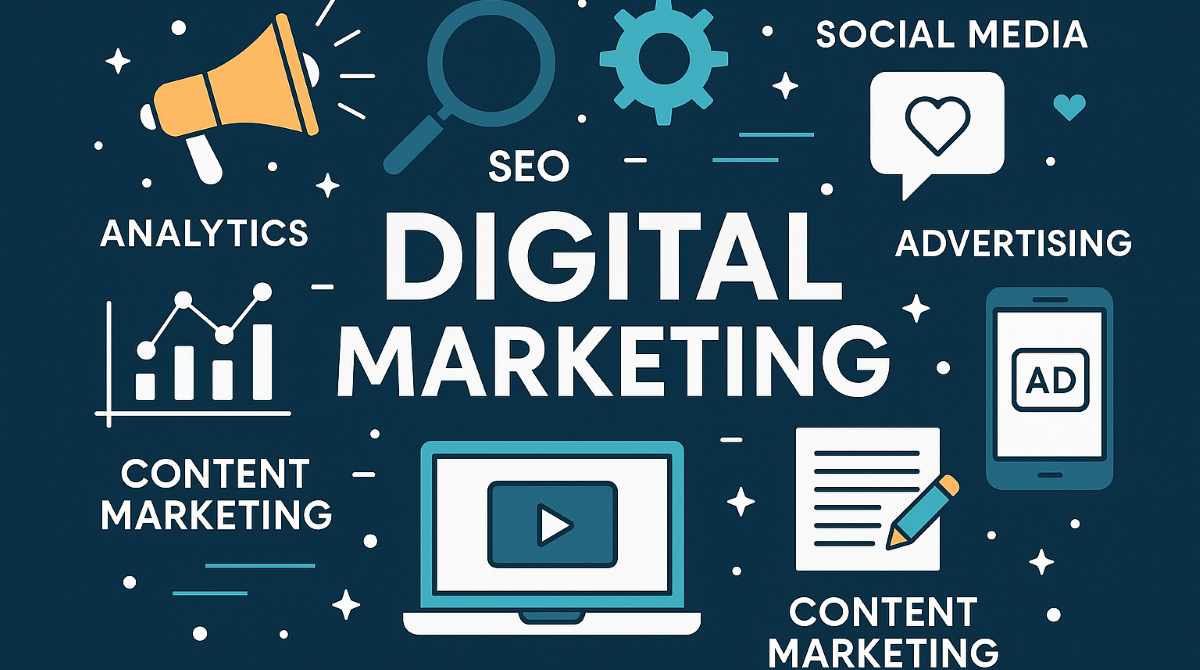
Today, marketers need to understand:
- Search engine optimisation
- Paid media platforms (Meta Ads, Google Ads, TikTok Ads)
- Conversion rate optimisation
- UX-driven content strategy
- Marketing automation and CRM workflows
- Data analytics, attribution modelling and dashboards
- AI content creation and campaign ideation
- Real-time audience targeting
- Consumer phycology and behavioural patterns online
- Web development, content creation and graphic design
Nearly none of these skills were part of marketing degrees even five years ago, and many universities still don’t offer them meaningfully today.
This is why marketing agencies often find brand and marketing managers glazing over when these modern elements are discussed. Someone who graduated a decade ago and completed only one or two short courses since can appear completely out of touch in today’s marketing meetings — as if the conversation is happening in a different language altogether.
As you would imagine, this has created a growing disconnect between many South African companies and the very markets they are trying to reach. Not because the economy is struggling, or consumers lack interest, but simply because their marketing departments still believe the four Ps are the be-all and end-all — and that billboards, print and social posts remain effective tools.
Artificial intelligence has fundamentally reshaped the marketing skill set.
Tools like ChatGPT, Midjourney, Jasper, Canva’s AI suite, and automated ad platforms have changed what companies expect from marketers. Where degrees still emphasise theoretical strategy and traditional media, AI demands technical fluency, adaptability and speed.
Companies today want marketers who can:
- Use AI tools to produce campaigns within hours, not weeks
- Analyse data dashboards in real time
- Personalise content through automation
- Produce multi-format creative on demand
- Optimise performance with rapid iteration
These are hands-on, self-taught, constantly evolving skills — not textbook material.
Yet after decades in the industry, you would be astonished at how many companies I witness that still have marketing teams operating in the stone age. They cling to outdated frameworks, rely on methods that no longer influence modern consumers, and resist adopting the digital tools that now define market relevance.
The result is entire departments making decisions based on practices that were effective 15 years ago, but are now completely disconnected from how South Africans actually consume content, make purchasing decisions, and interact with brands.
Short Courses and Specialised Certifications Have Replaced Degrees
Practical skill has now overtaken academic qualification.
Instead of relying on slow-moving university curricula, marketers are turning to fast, industry-recognised certifications from global platforms that teach what the industry actually uses. Whether it’s Google’s advertising ecosystem, Meta’s campaign architecture, HubSpot’s CRM automation, TikTok’s creative tools, or Amazon’s performance ads, these programmes provide real, immediately applicable skills.
They move at the speed of the industry — something universities simply cannot do. A marketer who spends four months immersed in intensive digital advertising training emerges far more employable, current and adaptable than someone who spent three years learning concepts that were already slipping into irrelevance by the time they graduated.
In today’s environment, competence comes from doing, not from passing outdated modules, and employers are hiring accordingly. This is exactly why professional agencies — the few that truly operate at industry standard — continue to secure clients year after year.
Hiring “a degree” has become a gamble, because companies quickly discover that the qualification doesn’t translate into modern capability. In most cases, the newly hired marketer ends up outsourcing the real work to an agency anyway.
What businesses are ultimately left with is a high salary attached to someone whose day-to-day output amounts to sending emails, organising trade-show banners and collecting quotes from agencies who are actually executing the strategy. It’s an expensive administrative loop masquerading as a marketing department — and companies are finally waking up to it.
Marketing Is Now a Performance-Based Discipline
The old world of marketing revolved around brand awareness, long-term positioning and theoretical consumer psychology. The new world is driven by measurable outcomes, no one is guessing anymore:
- Cost per acquisition
- Return on ad spend
- Lead quality
- Click-through rates
- Retargeting ability and performance
- Funnel optimisation and sales reflection
Marketing is no longer about what “sounds creative” — it’s about what converts.
Traditional degrees rarely teach practical performance marketing, which is now the backbone of modern campaigns. Look at marketing legends like the American market. They understand this. They have their finger on the pulse at all times and are therefore able to not only dominate in their space but globally within record time.
The Industry Now Values Practical Portfolios Over Academic Records
Employers have completely shifted how they evaluate marketing talent. Degrees no longer impress on their own — what matters now is evidence of real work.
Companies want to see campaigns that were actually executed, not hypothetical university assignments. They look for ad sets that generated measurable results, social media accounts that were grown and managed, landing pages that converted, automation flows that nurtured leads, content calendars that shaped brand narratives, and creative assets that performed in the real world.
Basically, they want proof that a marketer understands analytics, optimisation, and how to turn data into cash, baby!
This is where the gap becomes undeniable. A university graduate with no portfolio is now competing against self-taught creators who have two years of practical, results-driven work behind them — and employers are choosing the latter without hesitation.
Where Does This Leave the Future of Marketing Education?
Traditional degrees aren’t obsolete — but they no longer prepare students for what the industry actually demands. The future lies in a hybrid approach, one that blends theory with the kind of technical depth and real-world exposure universities have ignored for far too long.
Marketing education needs a solid strategic foundation, but it must be paired with mandatory practical training, modern digital tools, AI integration, and internships that expose students to the pace and pressure of real campaigns, real brand management. It also requires course content that evolves annually, not once every few years.
Until universities make this shift, new marketers will continue to rely on online certifications, self-directed learning, AI-driven tools and hands-on experience to become employable. And, the industry will keep rewarding those who adapt quickly, not those who simply graduate.
Companies are no longer looking for degrees — they’re looking for skill, output, adaptability and digital fluency. The real qualification for a marketing career comes from what you can do, not what you studied.
What are your thoughts on this? Be sure to share this article and do not forget to read, Toxic beauty products: Hidden dangers in everyday cosmetics, if you missed it.



Reader discussion
Join the conversation