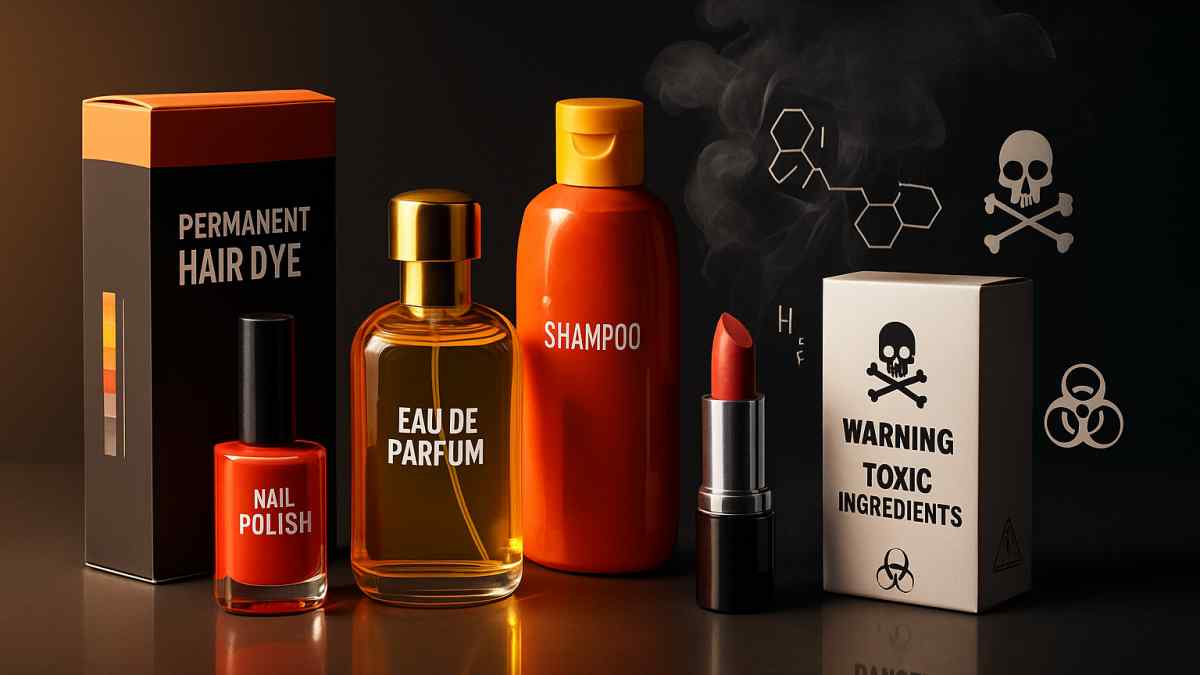
Toxic beauty products — that phrase should raise alarms. From hair dyes and nail polish to keratin treatments and perfumes, millions of people apply chemicals daily without realising the risks. These products may contain ingredients linked to cancer, hormonal disruption, and fertility issues.
Global research is growing, and the European Union continues to tighten cosmetic rules — but South Africa is still trailing behind.
South Africa’s outdated regulatory framework
South Africa still regulates cosmetics under the Foodstuffs, Cosmetics and Disinfectants Act (Act 54 of 1972).
Legal analysts have described the Act as outdated and misaligned with modern chemical safety standards, meaning harmful products can slip through regulatory cracks. CMS Law
The country’s labeling and ingredient‐listing standards (such as SANS 98) show efforts to bring transparency, but they cannot fully compensate for weak review of chemical safety. healthgov.za
By contrast, the EU bans or restricts more than 1,300 substances in cosmetics under its Regulation 1223/2009. EWG
The worst offenders
1. Para-Phenylenediamine (PPD)
Often used in permanent hair dyes and chemical straighteners, PPD helps pigment penetrate hair — but it also facilitates absorption into skin.
2. Phthalates (DBP, DEHP, BBP)
Used as plasticisers in fragrances, nail polish, and lotions, phthalates are known endocrine disruptors.
The Cancer Association of South Africa (CANSA) lists phthalates’ extensive use in personal care items and warns of their hormonal effects. cansa.org.za
3. Formaldehyde and formaldehyde-releasing preservatives
Formaldehyde is classified by the International Agency for Research on Cancer (IARC) as a Group 1 carcinogen (i.e., proven human carcinogen).
New research shows that formaldehyde-releasing preservatives appear in a wide range of everyday products: shampoos, lotions, soaps, and hair products. In a recent study, over 50% of Black and Latina women in Los Angeles reported using products with these preservatives.
Common preservatives that release formaldehyde include DMDM hydantoin and quaternium-15. Health
How to spot hidden toxins
Manufacturers often hide dangerous chemicals behind obscure names. Watch for these:
| Dangerous chemical | Also listed as |
|---|---|
| PPD | Toluene-2,5-diamine, p-aminoaniline, “colourants” |
| Phthalates | DBP, DEHP, BBP, or “fragrance / parfum” |
| Formaldehyde / FRPs | Quaternium-15, DMDM Hydantoin, Methylene Glycol |
To help consumers, the EWG’s Skin Deep® database provides hazard ratings (1 = low risk to 10 = high risk).
Emerging science underscores urgency
- Studies connect hair relaxers and formaldehyde exposure with higher cancer risks, particularly among women of colour. Silentspring.org
- Find of formaldehyde-releasing preservatives in everyday personal care products shows that it’s not just “special treatments”—regular use products may carry risk.
- In many products, formaldehyde or its releasing agents may not even be named plainly, making them harder to avoid.
Global pressure and cleaner shifts
Some leading global brands have committed to removing formaldehyde donors and phthalates from major product lines in the coming years.
Meanwhile, the EU’s Regulation 1223/2009 enforces strict controls and bans on numerous ingredients. safic-alcan.com
Across Africa, some brands are developing botanical-based, safer formulations. Regional initiatives are pushing for ingredient harmonisation to counter the flow of products banned elsewhere.
What you can do
- Read labels carefully. Avoid products naming the aliases above.
- Use independent tools. Check the EWG Skin Deep® rating or similar services.
- Be sceptical of vague labels. “Fragrance,” “parfum,” or “proprietary mix” may hide multiple chemicals.
- Buy transparency. Support brands that disclose full ingredient lists and safety data.
FAQs About Toxic Beauty Products
1. What are the most dangerous beauty products?
Permanent hair dyes with PPD, nail polishes with phthalates, and any product using formaldehyde or releasing agents are among the most concerning.
2. How can I tell if a product is harmful?
Check ingredient lists for the aliases. Use databases like EWG Skin Deep® to scan products.and view toxicity ratings instantly.
3. Why are women of colour more at risk?
Studies show that products marketed to women of colour often contain higher levels of PPD and formaldehyde donors.
4. What health hazards are linked to these chemicals?
They’re associated with cancer, fertility issues, hormonal disruption, asthma, skin conditions, and more.
5. What safer alternatives exist?
Henna or ammonia-free dyes, nail polishes labelled “free” of certain chemicals, and products with independent safety verification are better options.
6. Are “natural” or “organic” labels safe?
Not always. The terms “natural” and “organic” aren’t tightly regulated, meaning some products may still contain synthetic stabilisers or hidden preservatives. Always cross-check with reputable safety databases or certification programmes before purchasing.
Sources
- Silent Spring Institute — Formaldehyde releasers found in common personal care productssilentspring.org
- Public Health Columbia — Formaldehyde risk found in common personal care productsMailman School of Public Health
- CMS Expert Guide on Beauty (South Africa) — regulatory context for cosmetics in SA CMS Law
- Biorius — guide to South African cosmetics regulation Biorius
- SANS 98 / CTFA — ingredient labelling standards in SA ctfa.co.za
- EWG — banned chemicals in Europe vs U.S. cosmetics EWG
- Safic-Alcan — EU cosmetic regulation & banned ingredients safic-alcan.com
- Euronews — EU bans TPO from gel polish over fertility risk euronews
Be sure to read our Health & Wellness section in case you’ve missed it – Health & Wellness


Reader discussion
Join the conversation