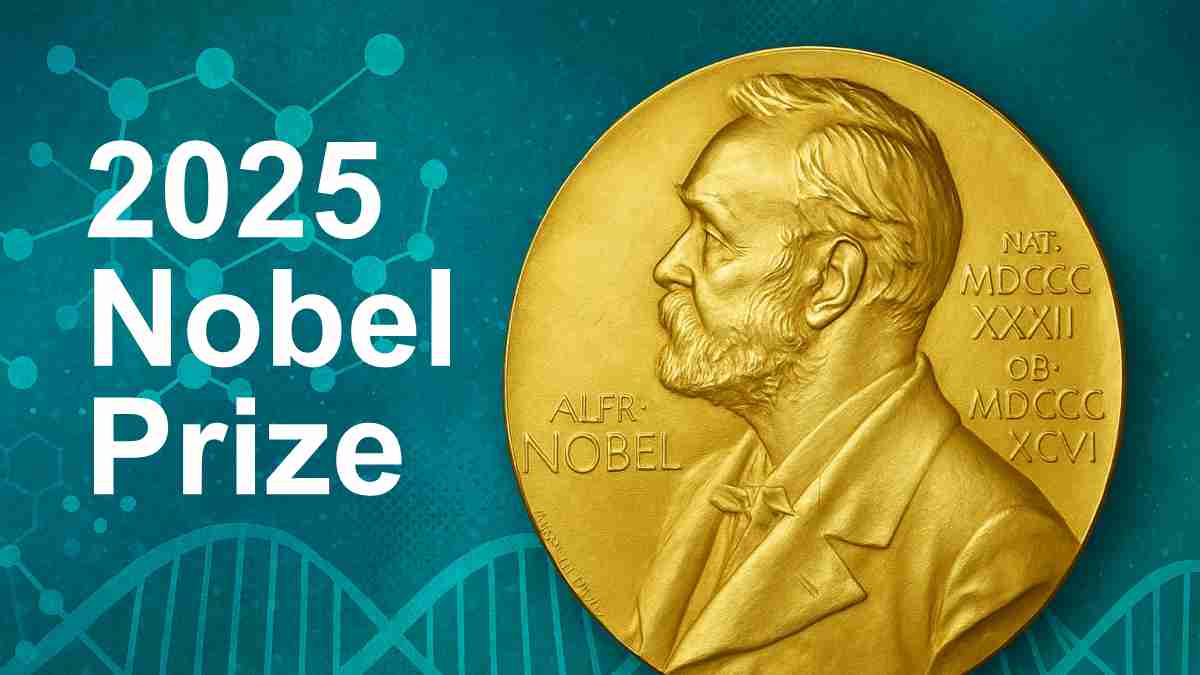
In a landmark announcement that underscores the strength of international scientific collaboration, the Nobel Assembly at Karolinska Institutet has awarded the 2025 Nobel Prize in Physiology or Medicine to three pioneering immunologists — Mary E. Brunkow and Fred Ramsdell of the United States, and Shimon Sakaguchi of Japan.
The 2025 Nobel Prize laureates were recognised “for their discoveries concerning peripheral immune tolerance” — a breakthrough revealing how the immune system prevents destructive attacks on the body’s own tissues.
The Nobel Committee described their work as transformative for understanding autoimmune diseases and developing new therapies.
Olle Kämpe, chair of the Nobel Committee for Physiology or Medicine, noted:
“Their discoveries have been decisive for our understanding of how the immune system functions and why we do not all develop serious autoimmune diseases.”
The 2025 Nobel Prize laureates
Mary E. Brunkow, 64, holds a Ph.D. from Princeton University and serves as Senior Programme Manager at the Institute for Systems Biology in Seattle. Her research has bridged genetics and immunology, focusing on molecular pathways that regulate immune balance.
Fred Ramsdell, 65, obtained his Ph.D. in 1987 from the University of California, Los Angeles, and now acts as Scientific Advisor at Sonoma Biotherapeutics in San Francisco. His work has centred on genetic mechanisms behind autoimmune susceptibility.
Shimon Sakaguchi, 74, Distinguished Professor at Osaka University’s Immunology Frontier Research Centre, earned both his M.D. and Ph.D. from Kyoto University. His early discoveries laid the groundwork for modern immunoregulation.
Together, the trio illuminated the function of regulatory T cells — the immune system’s “security guards” — which suppress excessive immune reactions that can cause conditions such as lupus or rheumatoid arthritis.
A timeline of discovery
- 1995: Sakaguchi identified a class of immune cells in mice that prevented autoimmune disease, introducing the concept of peripheral immune tolerance — regulation that occurs throughout the body rather than solely in the thymus (central tolerance).
- 2001: Brunkow and Ramsdell, studying autoimmune-prone mice, found a mutation in the Foxp3 gene responsible for multi-organ failure. Mutations in the human equivalent were later shown to cause IPEX syndrome, a rare autoimmune disorder marked by diabetes, eczema, and intestinal inflammation.
- 2003: Sakaguchi demonstrated that Foxp3 is essential for the development and function of regulatory T cells, firmly linking the gene to immune self-tolerance and establishing the field of peripheral immune tolerance.
Global medical impact
The trio’s discoveries have reshaped medicine. By explaining how regulatory T cells prevent the immune system from attacking self-tissue, their work has guided new treatments for autoimmune diseases such as lupus and rheumatoid arthritis, influenced cancer immunotherapy by refining immune targeting, and improved organ transplant protocols through better control of rejection.
Several clinical trials now explore therapies derived from these insights, offering precision approaches that strengthen or temper the immune system as required. The Nobel Assembly described the impact succinctly:
“Their discoveries have laid the foundation for a new field of research and spurred the development of new treatments, for example for cancer and autoimmune diseases.”
2025 Nobel Prize Award details and ceremony
The 2025 Nobel Prize in Physiology or Medicine carries a monetary award of 11 million Swedish kronor (approximately $1.05 million), to be shared equally among Brunkow, Ramsdell, and Sakaguchi. The prize will be formally presented on 10 December 2025 in Stockholm, the anniversary of Alfred Nobel’s death.
This year’s Nobel marks the opening of the 2025 awards season and reinforces the value of persistent, cross-border research. As humanity faces ongoing immune-related health challenges, from autoimmune disorders to complex cancers, these findings illuminate how understanding balance within the immune system can lead to healthier futures.
Nevertheless, what are your thoughts on the above? Be sure to leave your comments below and read, Fake doctors in South Africa: How to protect yourself from medical impostors and illegal procedures, if you missed it.
Sources
- Official Nobel Prize Announcement – NobelPrize.org
- Popular Information – NobelPrize.org
- Reuters – “Brunkow, Ramsdell and Sakaguchi win Nobel medicine prize”
- The Hindu – “Medicine Nobel 2025 awarded to trio for T cells discovery”
- ABC News – “Trio of scientists win Nobel Prize in Medicine for work on immune system”
- NobelPrize.org – List of Laureates
FAQs about the Nobel Prize in Physiology or Medicine
What is the Nobel Prize in Physiology or Medicine?
The Nobel Prize in Physiology or Medicine is one of six Nobel Prizes established by Alfred Nobel’s will in 1895. It recognises outstanding discoveries in the fields of medicine and biology that benefit humanity.
Who decides the Nobel Prize in Medicine?
The prize is awarded by the Nobel Assembly at the Karolinska Institutet in Stockholm, Sweden. This group of 50 professors reviews nominations and selects the laureates each year.
When is the Nobel Prize announced and awarded?
The Medicine Prize is typically the first Nobel announced each October. The award ceremony takes place on 10 December in Stockholm, marking the anniversary of Alfred Nobel’s death.
What do Nobel Prize winners receive?
Each laureate receives a gold medal, a diploma, and a monetary award. In 2025, the prize amount is 11 million Swedish kronor (about $1.05 million), divided equally among the recipients.
How are Nobel laureates nominated?
Nominations are made by invited experts, including professors, previous laureates, and members of medical academies. The process is confidential, and details of nominees remain sealed for 50 years.
Can a Nobel Prize be shared?
Yes. A Nobel Prize can be awarded to up to three individuals who have contributed significantly to the same discovery or field of research — as in 2025, when Brunkow, Ramsdell, and Sakaguchi shared the honour.
Has anyone ever declined the Nobel Prize?
Yes. A few recipients have declined the award, including Jean-Paul Sartre (1964, Literature) and Lê Đức Thọ (1973, Peace Prize), though such instances are extremely rare in the Medicine category.
Reader discussion
Join the conversation