
Language has always been at the heart of how societies think, connect, laugh, and debate. Yet in today’s digital world, the words we use are no longer shaped purely by culture or conversation, they are increasingly steered by technology companies. One clear example is Google Inclusive Language, a system designed to nudge writers toward supposedly “better” word choices.
What began inGoogle Docs has now spread into the very framework of online publishing, including WordPress and other major platforms. This reach means the influence extends far beyond private writing, directly affecting the articles, blogs, and websites that millions of people read every day.
What is Google Inclusive Language?
Google Inclusive Language works by flagging terms it considers outdated, biased, or exclusionary, and then suggesting replacements. For example, chairman may be flagged with chairperson, while policeman might be replaced with police officer.

From Private Writing to Public Narratives
The biggest concern is that Google Inclusive Language now extends beyond private documents into platforms like WordPress. This means suggested changes don’t just affect how individuals draft text — they influence the actual articles, blogs, and press releases people read online.
In practice, if publishers fail to adopt these “approved” terms, their content risks being negatively ranked on Google. This is not simply about correcting “bad words” — it is about shaping narratives through algorithmic reward and punishment. Put plainly, it rewards conformity and punishes free expression.
Ranking: Reward and Punishment
The impact doesn’t stop with writing prompts. Content that fails to adopt Google’s “approved” wording can quietly suffer in search results. While Google never explicitly says it de-ranks content for language use, its algorithms reward compliance through greater visibility, and penalise non-conforming articles by pushing them down the rankings.
In practice, this creates a system where conformity is rewarded and free expression is discouraged. Readers then encounter only what the algorithm allows to surface, while alternative viewpoints or historically accurate terms risk disappearing into obscurity.
The Free Expression Debate
Supporters argue that inclusive language creates safer, fairer communication. But the question remains: who decides which words are off-limits?
And more importantly, why should the sensitivities of a few dictate the vocabulary of the many? Softening words to avoid upsetting certain groups may sound compassionate, but when it becomes enforced through algorithms, it crosses into control.
By that principle, should a governing body stop you from buying junk food because it is unhealthy? Should it prevent you from watching a film because its themes might offend? Society accepts that people can make choices for themselves — yet when it comes to language online, Google and similar corporations increasingly assume the role of “moral gatekeepers”.
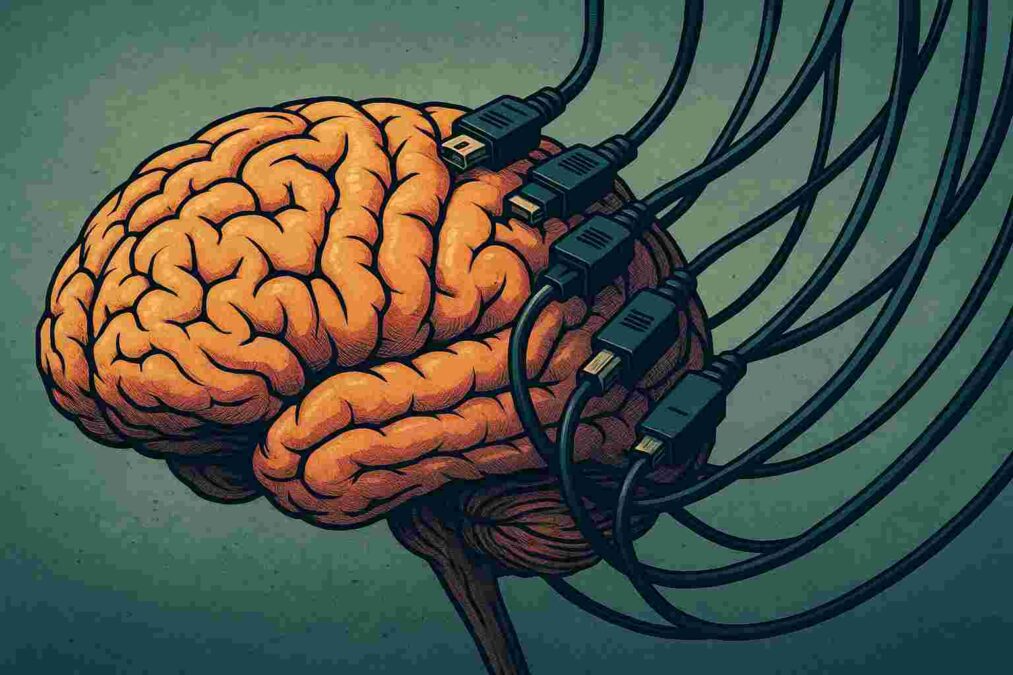
When a company with Google’s reach builds tools that nudge writers away from certain terms, the result is often quiet self-censorship.
Writers avoid flagged words, even when those terms are historically accurate, legally defined, or culturally specific, simply to prevent their content from being buried in search results. Over time, this erodes nuance, discourages robust debate, and narrows the spectrum of public conversation. What begins as a suggestion becomes a form of silent censorship, and with each algorithmic push, free expression is quietly traded for conformity.
Broader Context and Real-World Impact
The influence of Google Inclusive Language cannot be viewed in isolation. This is part of a broader pattern where language is actively shaped, guided, and at times restricted by institutions.
History is filled with examples: Orwell’s Newspeak in 1984 imagined a society where limited vocabulary meant limited thought, while in South Africa’s own past, state media carefully managed which words and terms could appear in public discourse. The methods may have changed, but the principle remains the same; control the words, and you control the narrative.
Today, the digital version of this control is seen in how content visibility is tied directly to compliance. Publishers report that articles using flagged words often lose traction in search rankings, while those rewritten to align with “approved” terms are pushed upward. This effectively rewards conformity and punishes free expression, creating a feedback loop where visibility is no longer about the strength of ideas, but about linguistic compliance.
For South Africa, the implications are profound. Words like special needs in education, or cultural terms with deep local context, may be flagged or rewritten by algorithms that fail to understand nuance. What is widely understood and accepted in communities here risks being erased by a one-size-fits-all system built thousands of kilometres away.
The risk is not just about language, but about culture and identity. If the digital tools used in schools, newsrooms, and businesses begin erasing terms specific to our reality, South Africa’s narrative risks being diluted into a bland global script.
Impact on South Africa and Beyond
In South Africa, where languages, history, and identity are deeply layered, such tools may oversimplify cultural realities. For instance, words with specific local meaning could be flagged simply because they do not align with a global algorithm.
As WordPress powers a large share of South Africa’s news and business websites, the spread of Google Inclusive Language raises urgent questions: Is this improving inclusivity, or is it outsourcing control of local narratives to a multinational corporation thousands of kilometres away?
Language naturally evolves through people, communities, and cultures. But when Google Inclusive Language is embedded not just in private tools like Docs but in public publishing platforms like WordPress, and its use directly impacts search visibility, the stakes change. This is no longer about guidance, it’s about control of how information is presented to the world. No matter your personal outlooks, this should concern you enough to take it seriously.
The debate is not whether inclusive language itself is good or bad, but whether Big Tech should have the power to dictate the boundaries of expression. One word at a time, Google could quietly rewrite how entire societies speak, write, and think.
What are your thoughts on this? Let us know below.
Be sure to read, Coalition of Willing Meets in Paris: Ukraine, Lisbon Tragedy, and North Korea–Russia Headline, if you missed it.



Reader discussion
Join the conversation