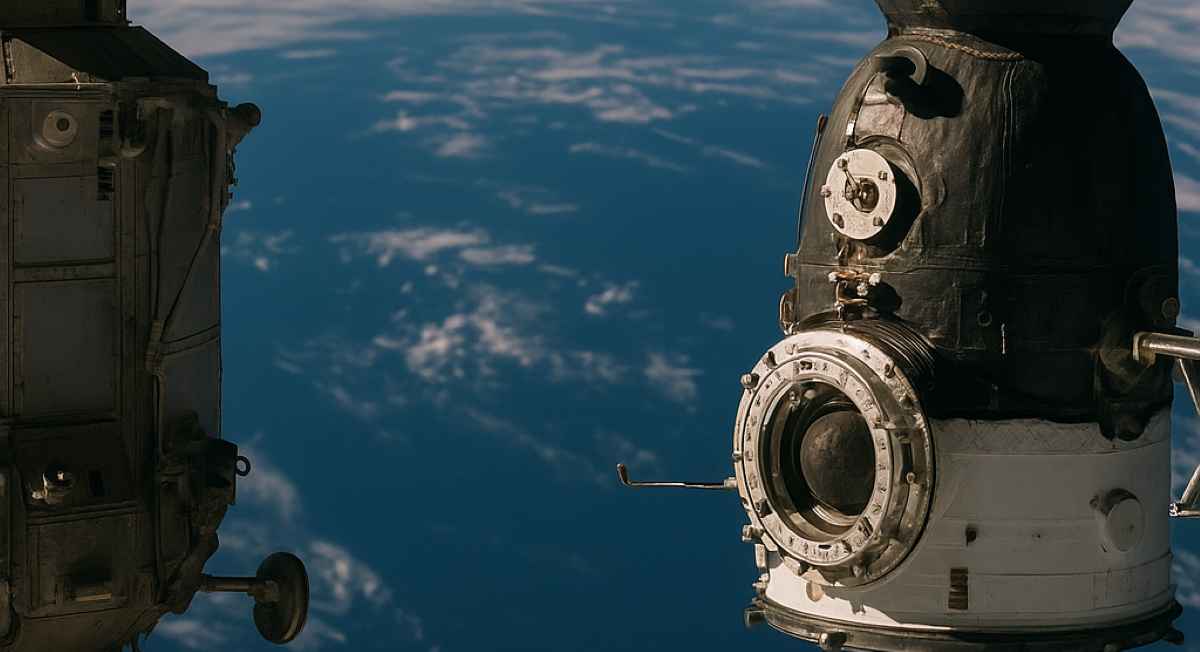
Beijing / space orbit – Three Chinese astronauts onboard the Tiangong space station will remain in orbit for an extended period after their return capsule was reportedly struck by a piece of orbital debris.
The crew of the Shenzhou-20 spacecraft — Chen Dong, Chen Zhongrui and Wang Jie — have been aboard Tiangong since 24 April 2025. They were scheduled to return to Earth on 5 November 2025, but authorities announced the mission would be postponed after damage was detected on their return vehicle.
What happened and what it means
Chinese state media, citing theChina Manned Space Agency (CMSA), said an impact analysis and risk assessment are underway following what is described as a “suspected” strike by a piece of space debris.
While the extent of the damage has not been publicly disclosed, the delay underscores the growing hazard posed by orbital debris — fragments of defunct satellites, spent rocket stages and other space junk that travel at extremely high velocities around Earth.
In addition to safety concerns for the crew, mission planners must now decide whether a backup return vehicle will be used or whether the current capsule can be repaired and certified for re-entry.
Implications for China’s space ambitions
This incident comes at a critical point for China’s human spaceflight programme, which has been steadily progressing in recent years. The Tiangong space station serves as a platform for long-duration human missions, scientific experiments and international cooperation efforts.
A delayed return also means the astronauts will remain in orbit longer than planned, which entails additional demands on life-support systems, crew health management, station logistics and ground-control support.
But, when looking at the story of the Chinese astronauts, what is the global relevance?
The strike on the Shenzhou-20 return capsule highlights how space debris is a shared risk for all space-faring nations. Even a small fragment — minute in size — can inflict significant damage when travelling at orbital velocities.
Experts warn that as more satellites are launched and old ones de-orbit or break up, the debris-population issue will increasingly demand coordinated international action on mitigation, debris removal and orbital traffic management.
What happens next?
CMSA has not announced a new return date for the Shenzhou-20 crew. The options under consideration include:
- Repairing or verifying the integrity of the current return capsule.
- Using an alternate spacecraft, such as the incoming Shenzhou-21, as a rescue or return vehicle.
- Extending the stay of the current crew until a safe window for re-entry is identified and all technical checks are satisfied.
Meanwhile, China’s space community will be closely watching for any ripple effects: mission scheduling, international partner coordination, and broader public confidence in long-duration human spaceflight.
Why the issue matters to South Africa and the world
While this event involves a Chinese mission, the underlying themes are of global importance. South Africa, as part of the international space-science community, can glean several lessons:
- The importance of robust orbital-debris monitoring and adherence to sustainability protocols.
- The need for international collaboration on space-traffic management and debris-removal initiatives.
- How delays or incidents in human missions can affect public perception, policy and funding for broader space programmes.
For South Africa’s space-science stakeholders and academic institutions, the event provides a timely reminder of the interconnected nature of space operations: what happens in low Earth orbit can have implications for mission planning, safety and research globally.
As the story unfolds, Titus News will continue to monitor updates from the China Manned Space Agency and international observers. The crew’s safe return remains a priority — and this incident underlines how even the smallest piece of debris can demand rigorous scrutiny.
What are your thoughts on this? Let us know below.
Do not forget to read, AMD AI developments: how new partnerships and products are reshaping its future, if you missed it.



Reader discussion
Join the conversation