In 2025, the Global Perceptions of South Africa reflect a complex tapestry woven from democratic resilience, economic fragility, and cultural vibrancy. Recent reports from international bodies and analysts show a country that, while celebrated for its democratic institutions and soft power, is still grappling with deep-seated issues that undermine its credibility.
Governance and Corruption: A Persistent Albatross
International governance watchdogs continue to express concern over South Africa’s battle with corruption and institutional weakness. Transparency International’s Corruption Perceptions Index (2024) once again highlighted the country’s ongoing struggle, with its score remaining largely unchanged and well below the level needed to signal effective anti-corruption efforts. The cost of corruption and its drastic effect on the country is resulting in wide spread problems.
From Eskom to essentail services and general municipalities, corruption continues to gut the country’s progress and democracy.
A New Political Era
Following the 2024 general election, the ANC lost its absolute majority for the first time in 30 years, a landmark event that has been praised by groups like Freedom House as a testament to the country’s robust democracy. The subsequent formation of a Government of National Unity is seen as a new opportunity to address long-standing issues and strengthen democratic norms. However, internal fighting and political deadlocks are a common issue within the GNU.
Global Perceptions of South Africa Highlight Persistent Problems
However, while the political landscape has changed, the challenges remain. The U.S. State Department’s 2024 report on human rights noted that the South African government had not taken credible steps to prosecute officials involved in human rights abuses or corruption. This lack of accountability remains a significant concern for foreign observers.
Economic Challenges and Outlook: A Slow, Cautious Recovery
South Africa’s economy is a key area of global scrutiny. The World Bank’s 2024 economic overview highlighted the country’s muted economic growth and high unemployment, which stood at an elevated 31.9% in late 2024. The long-running energy crisis, a direct consequence of corruption and mismanagement at state-owned enterprises like Eskom, has been a major deterrent to foreign investment. Now, with the introduction of the land claim bill, a communistic move as stated by various sources, adds to the unappeal of the county.
Signs of Improvement
Despite these grim figures, there are glimmers of hope. Reports note a substantial improvement in electricity supply since March 2024, with load shedding becoming less frequent. However, time will tell if this is a fixed solution or a current flash in the pan, considering how long load shedding has been in effect in South Africa.
This, along with some structural reforms, has led to a cautious sense of optimism, with the National Treasury projecting slightly improved economic growth for 2025 and beyond. However, the global perceptions of South Africa will not be a quick fix or acheived through minior econnomic or policy movements.
Foreign Policy and Diplomatic Relations: Navigating a Fractured World
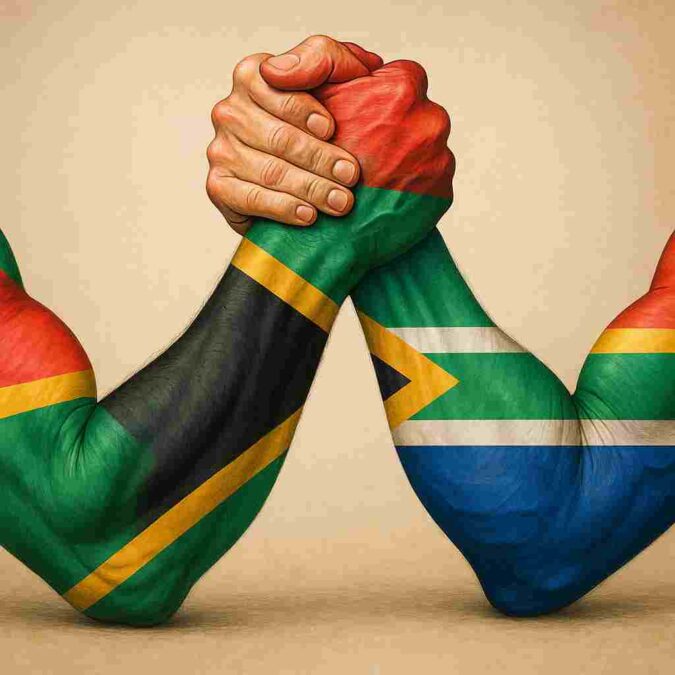
South Africa’s foreign policy has drawn significant international attention, with its non-aligned approach to global conflicts causing diplomatic friction—particularly with Western powers. While the government maintains that its stance is rooted in sovereignty, dialogue, and historical solidarity with liberation movements, critics argue that this positioning often places the country at odds with key trading partners and multilateral institutions.
Instances such as its cautious rhetoric around the Russia-Ukraine war and abstentions in United Nations votes have led to perceptions that Pretoria may be leaning closer to Eastern alliances, raising questions about long-term strategic consequences for economic diplomacy, global investment appeal, and its role within BRICS.
Unfortunately, these government decisions have come at a heavy cost to the ordinary South African just trying to get by
BRICS and the Global South
South Africa’s active role in the BRICS grouping (Brazil, Russia, India, China, and South Africa) is seen as a deliberate pivot towards a more multi-polar world. International relations experts from institutions like the Munich Security Conference and Chatham House suggest that South Africa’s foreign policy will continue to prioritise its economic interests and push for the elevation of the “Global South.”
Will The G20 Presidency Change Global Perceptions of South Africa?
South Africa’s upcoming G20 presidency is a major opportunity to reset its diplomatic narrative. As the first African country to host a G20 summit, it has the chance to steer global policy discussions towards issues of particular importance to developing nations, such as food security, equitable economic growth, and AI governance.
Soft Power: An Undeniable Strength
While the government’s performance receives mixed reviews, South Africa’s soft power remains a constant source of global admiration. The nation’s cultural, scientific, and sporting achievements continue to command respect.
Brand Strength
The 2024 Brand Finance Nation Brands report noted that South Africa’s global standing had improved in categories like “future growth potential” and “leader in sports.” This is largely due to the strength of its private sector brands and the success of national teams, like the Springboks, which act as powerful ambassadors for the country.
Technological Advancement
The United Nations e-Government Index (2024) ranked South Africa 40th globally, a significant leap from previous years. This places it as a leader in Africa for digital government services and infrastructure development.
A Dissonance Between Perception and Reality
In 2025, the global perceptions of South Africa are not defined by a single narrative but rather by a tapestry of contrasting viewpoints. On one hand, the nation is lauded for its resilient democracy, cultural richness, and emerging role in global diplomacy—attributes that continue to enhance its soft power and brand appeal. International observers often highlight South Africa’s commitment to freedom of expression, judicial independence, and its leadership in continental affairs as hallmarks of a mature and evolving society.
On the other hand, serious and debilitating concerns persist. Widespread corruption, high unemployment, deepening inequality, and lapses in government accountability paint a sobering picture of the lived experience for millions of South Africans.
These realities frequently clash with the polished image projected on the world stage, revealing a country caught between aspiration and execution.
As South Africa prepares to take on greater global responsibilities—such as its upcoming G20 presidency—the pressure mounts to align perception with performance. The real challenge lies in converting international goodwill and institutional admiration into tangible improvements that uplift the lives of everyday citizens. Until then, the global perceptions of South Africa will remain suspended between promise and paradox.
Nevertheless, leave your thoughts on this in the comment section below.
FAQs: Global perceptions of South Africa:
What is the current global perception of South Africa in 2025?
South Africa is seen as a vibrant democracy with strong cultural influence and soft power. However, international reports also highlight persistent issues such as corruption, weak governance, economic stagnation, and social inequality. The global perception is a mixed one—both hopeful and cautious.
Has South Africa made progress in tackling corruption?
Despite some political changes, South Africa continues to struggle with corruption. Transparency International’s 2024 Corruption Perceptions Index shows little improvement, and international watchdogs have criticised the government for not prosecuting officials involved in corruption and human rights abuses.
How did the 2024 general election impact South Africa’s image?
The 2024 election, in which the ANC lost its absolute majority for the first time in 30 years, was seen as a positive democratic milestone. The formation of a Government of National Unity was praised internationally, but real change depends on the government’s ability to deliver on accountability and reform.
What is the outlook for South Africa’s economy in 2025?
South Africa’s economy remains under pressure, with unemployment at 31.9% and growth still below expectations. However, improvements in electricity supply and some structural reforms have led to cautious optimism, with the National Treasury forecasting modest growth in 2025.
What role does South Africa play in international diplomacy?
South Africa maintains a non-aligned foreign policy, which has caused friction with Western countries. Its deepening involvement in BRICS and its upcoming G20 presidency reflect a pivot toward championing Global South interests and reshaping global discussions on development and technology.
What is South Africa’s soft power and why is it important?
Soft power refers to South Africa’s global influence through culture, sport, science, and technology. Despite political challenges, the country’s strong private sector brands, digital governance advancements, and successful sports teams continue to bolster its international reputation.
How is South Africa performing in digital and technological development?
South Africa ranked 40th in the United Nations e-Government Index (2024), leading the African continent in digital public services. This reflects significant progress in modernising its public sector and infrastructure.
What opportunities does the G20 presidency present for South Africa?
As the first African country to host a G20 summit, South Africa has a historic opportunity to shape global conversations around food security, equitable economic growth, climate change, and the regulation of artificial intelligence—key issues affecting the developing world.
Why is South Africa’s relationship with BRICS significant?
BRICS provides South Africa with a platform to advocate for multipolar global governance and economic cooperation with emerging powers. This strategic alliance helps the country strengthen its diplomatic influence outside traditional Western structures.
What are the key challenges South Africa must overcome to improve its global standing?
To improve its reputation, South Africa must address corruption, ensure accountability for human rights violations, reduce unemployment, and foster inclusive economic growth. Bridging the gap between international admiration and domestic reality remains the central challenge.
Be sure to read, 2026 South Africa Municipal Elections: Crisis, Coalitions and What Lies Ahead, if you missed it.